I tend to write
down everything I read about photography (well mostly) and post it on my
web - it keeps my old brain ticking over. This blog pertains to
cameras, lenses and photography articles I am interested in and includes some video
reviews with no adverts.
I
receive no
remunerations from any third party mentioned herein. However if you have
enjoyed your visit - please consider donating (the minimum is
£2)
to the
Sick Kids Friends
Foundation
Judging by the positive
reviews on the
Fujifilm X100VI Compact Camera and the
massive pre-orders in China, never mind the rest of the world, your pre-order
could take at least 3 years to fulfill. This is due to the probable inability of
Fujifilm to manufacture enough cameras per year to match the pre-orders.
It is obvious that the X100VI compact with its top end image quality is designed
to carry around all day and of course, for street photography.
I use the Fujifilm X100S compact camera and although tempted by the Fujifilm
X100VI, my next street photography camera is likely to be a 35mm full frame
system.
The Studio in this video provides an in-depth analysis of the Fujifilm
X100VI Camera -
_________________________________________________
30th December 2023
'Classic' Light Lens Lab Lens for Leica!
I have always liked the
classic rendering of images from old lenses and I own a few from the 1960s. Of
course, I would like to own a Leica M Series camera like the M11-P but the cost
of the camera and a classic style Leica M Lens is horrendous and hard to justify
- especially as my skill in street photography has its limitations.
However, those compact classic lenses are out there and
Light Lens Lab have manufactured a replica
from 1966 which is for the Leica M Series Camera but can be adapted for other
cameras.
Ted Forbes reviews the new Light Lens Lab 50mm f1.2 ASPH 1966 Prime Lens -
_________________________________________________
2nd October 2023
The Nikon Zf 35mm 'Full Frame'
Digital Camera!
I own a Nikon FM3a 35mm 'full
frame' film camera which is rolled out from time to time when I seek a change
from using my digital cameras. There is a post on this camera, the Nikon FM3a, further down the page.
I have always wanted a digital version of the Nikon FM3a and at last a Nikon Zf
has appeared. The icing on the cake - using the Nikon's FTZ II F lens to Z body mount
adaptor, the
Nikon Zf body accepts my
Nikon F 28/50/135mm AIs manual focus prime lenses. This new Nikon adaptor allows
full access to the additional function buttons on the
Nikon Zf body.
I am also very tempted to purchase a 'brand new' retro style 1960s/1980s
Nikon Z lens from
Artra Lab rather than use the Nikon FTZ II
adaptor. There is also the
Nikkor 28mm f2.8 FX Z Lens which is very
cost effective.
Ted Forbes reviews the new
Nikon Zf system camera -
_________________________________________________
5th September 2023
Sony A7C II and A7CR Cameras!
Ted Forbes reviews the new
Sony compact system cameras -
_________________________________________________
26th May 2023
The Leica Q3 Camera!
I currently use a digital
Fujifilm X100S Compact for my Street Photography
and I have never sought to replace it. It just does a great job and the handling
of it with its f2 23mm (35mm field of view) fixed lens is superb.
However, a compact 35mm 'full frame' digital camera with a f1.7 28mm fixed lens
would make for a nice upgrade. Step forward the digital
Leica Q3 Camera and at a cool £5,300.00, it
is not cheap but it offers excellent technology for the money.
Some videos from the Internets top reviewers -
_________________________________________________
10th March 2022
Sony Xperia 5 III Smartphone
I finally replaced my very
old mobile phone and purchased a Sony Xperia 5 III Smartphone. I have started an
article on the phone -
Sony Xperia 5 III Smartphone Review.
I like the wide perspective of the 16mm 'field of view' lens and it has been an
interesting experience using it for street photography. This is an image that I
captured in DNG file format and converted it to monochrome in Adobe Lightroom.
The original colour version can be seen in the review.
Sony Xperia 5 III Smartphone Official Video
-
_________________________________________________
14th January 2022
The New Leica M11 Announced
I am sure that this new Leica
M11 camera will prove ideal for street photography. Coming in at £7,000.00 vat
inclusive in the UK for the black or the chrome variants, I guess I might have
to sell my car to own one and that is only for the body, I still would have the
lens to choose.
_________________________________________________
22nd December 2021
The Zeiss Milvus 18mm f2.8 Prime
ZE Lens
Despite Canon's development
in 'mirrorless' cameras and RF lenses, I intend to remain with the Canon EF lens
system format. In the near future, I may replace my 2005 Canon 5D DSLR camera
with the last
Canon
DSLR which may or may not be announced in the near future. If there is an
announcement in 2022 by Canon that there will be no further DSLR camera
development, then there is always the existing Canon 6D MK II or the Canon 5D MK
IV DSLRs to consider.
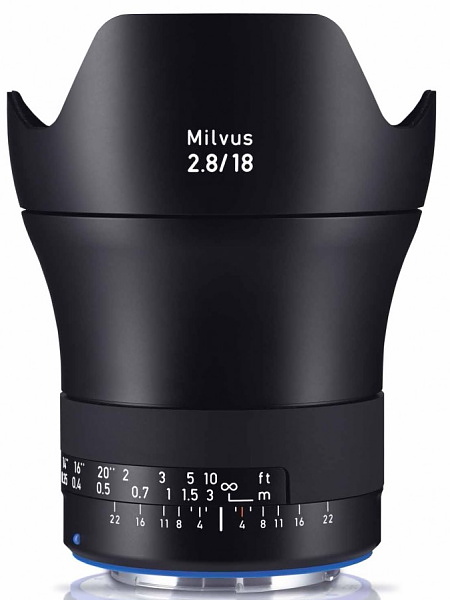
The
widest lens that I possess is the Canon 24L f1.4 MK I prime lens but I have
always had a hankering to shoot wider. I have been searching for an 18mm lens
that is manual focus and has a depth of field scale, so that I can push back or
bring forward a preset
hyperfocal distance.
It is a neat well built prime with large glass that can accept a 77mm filter. At
3.66" without lens caps it is not too large and it weighs in at 721g which is
very reasonable; not too heavy.
Using the lens in hyperfocal mode is also excellent for street photography and
although 18mm may seem very wide, I am fairly confident that the focal length
will offer an excellent and different perspective to my normal street
photography, using a 35mm or 50mm lens. The Zeiss Milvus 18mm f2.8 lens is not
inexpensive and it comes in at around £1,999.00 vat inclusive in the UK.
_________________________________________________
27th October 2021
The Canon 5D 'Classic' DSLR Camera
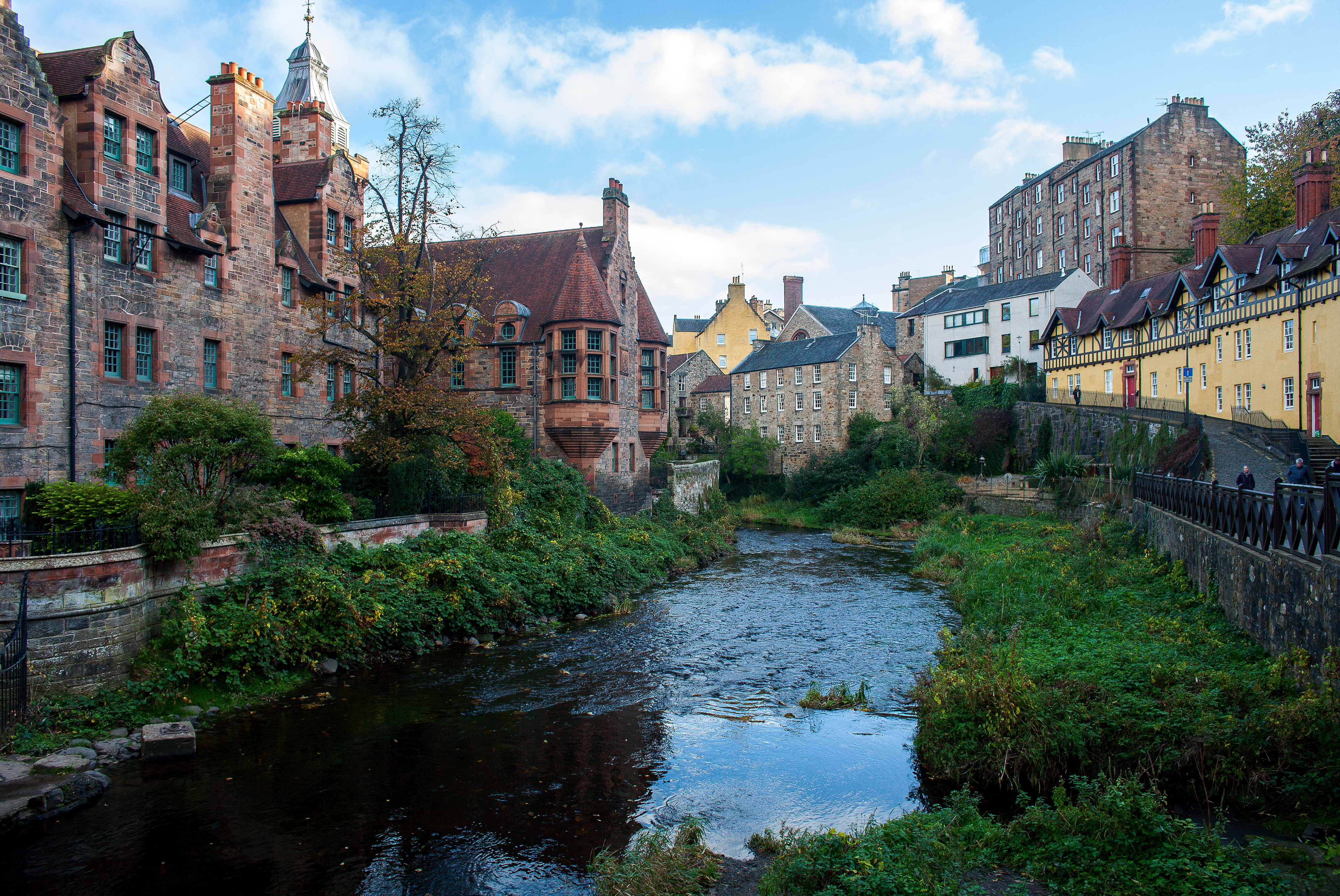
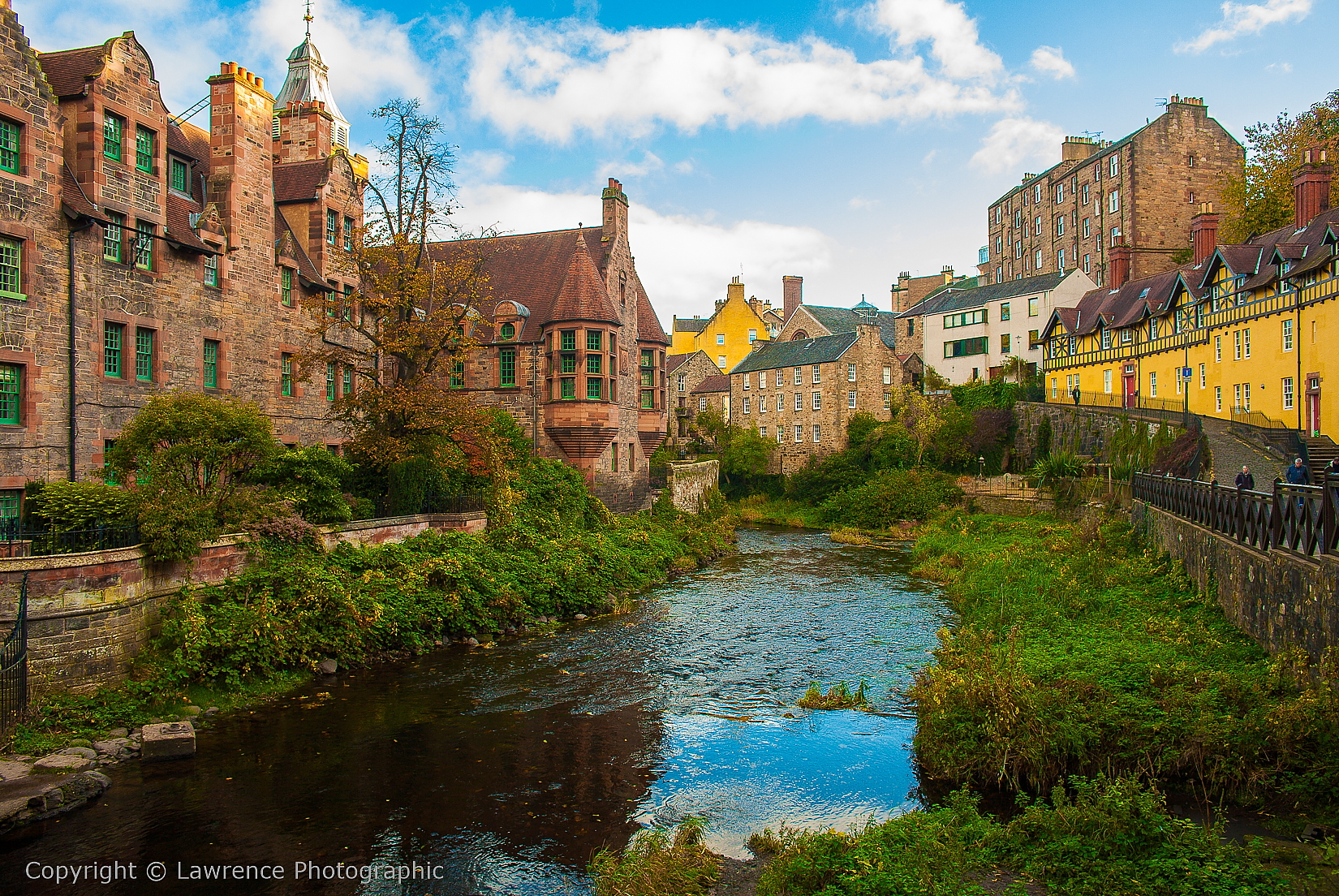
I recently visited an old
part of Edinburgh, Scotland known as 'The Dean Village'. I took along my 2005 Canon 5D MK 1 DSLR Camera
and a Canon 24mm f1.4 L MK 1 Prime Lens. I thoroughly enjoyed the scenery and
finished off by heading through 'The
Dean Cemetery' on my way back to my car. I added the village and
cemetery Canon images to the end of the existing web I had earlier created with
images from my
Fujifilm X100s compact camera.
The Canon 5D may be old camera kit at 16 years of age but it still holds it's
own despite the sensor delivering only 12MPixels which is a long way short of
the pixels in the current Canon 5D MK IV DSLR Camera. You can pick up a good
Canon 5D MK 1 DSLR Camera for around
£300-£600 in the UK.
An image from 'The Dean Village' -
Another processed version -
_________________________________________________
4th September 2021
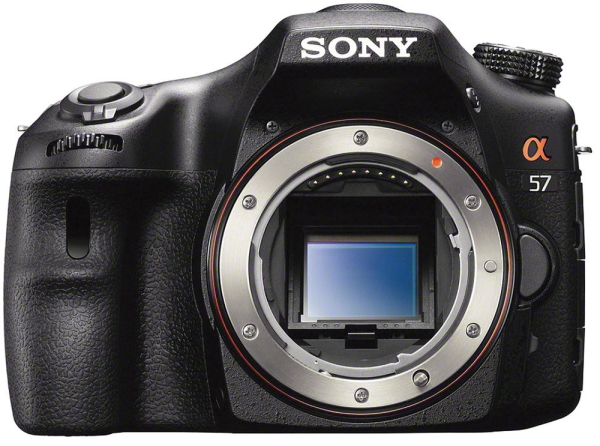
The Sony Alpha A57 SLT Camera
I have kept all my cameras
and lenses and I still use them. One of my favourite cameras is the
Sony Alpha A57 SLT Camerawhich
I purchased in 2012 along with the Sony DT 18-55mm f3.5/f5.6 SAM Zoom Lens. It
was way ahead of its time back then and
still holds good today. The image
quality from the kits lens is exceptional, especially the jpegs, straight out of
the camera.
The camera is compact and
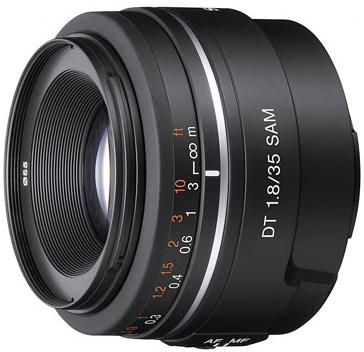
lightweight in size and my favourite lens is the Sony DT 35mm f1.8 SAM Prime
Lens which delivers a very nice 52mm field of view. Its a relativelycheap
lens but gets decent reviews.
From
photozone - "It may surprise you but regarding the sum
of its optical qualities it is actually a better choice than the
"mighty" (albeit outdated) Sony 35mm f/1.4 G - Sony's
professional grade full format 35mm lens. The AF performance of
the new SAM drive is pretty decent and we didn't really
experience any issues with AF accuracy during our field testing"
Some
Sony DT 35mm f1.8 SAM Prime Lens
RAW conversion images taken in Edinburgh Castle -
I kept the 2012 review on the
Sony Alpha A57 SLT Camera with various
lenses on my website (scroll down for the extensive index) and this camera can
still be found second hand, some in decent condition for very cheap money.
_________________________________________________
1st September 2021
The Sony Xperia 1 III Smartphone
I don't have a smartphone and
I never planned to get one but then the Sony Xperia 1 III was announced and the
camera produces RAW DNG image files which can be edited using Lightroom software
on my computer and jpeg image files straight out of the camera.
I have started to research the phone and my ongoing results are in this
article.
_________________________________________________
23rd July 2021
The Crosstour CT9900 Action
Digital Camera
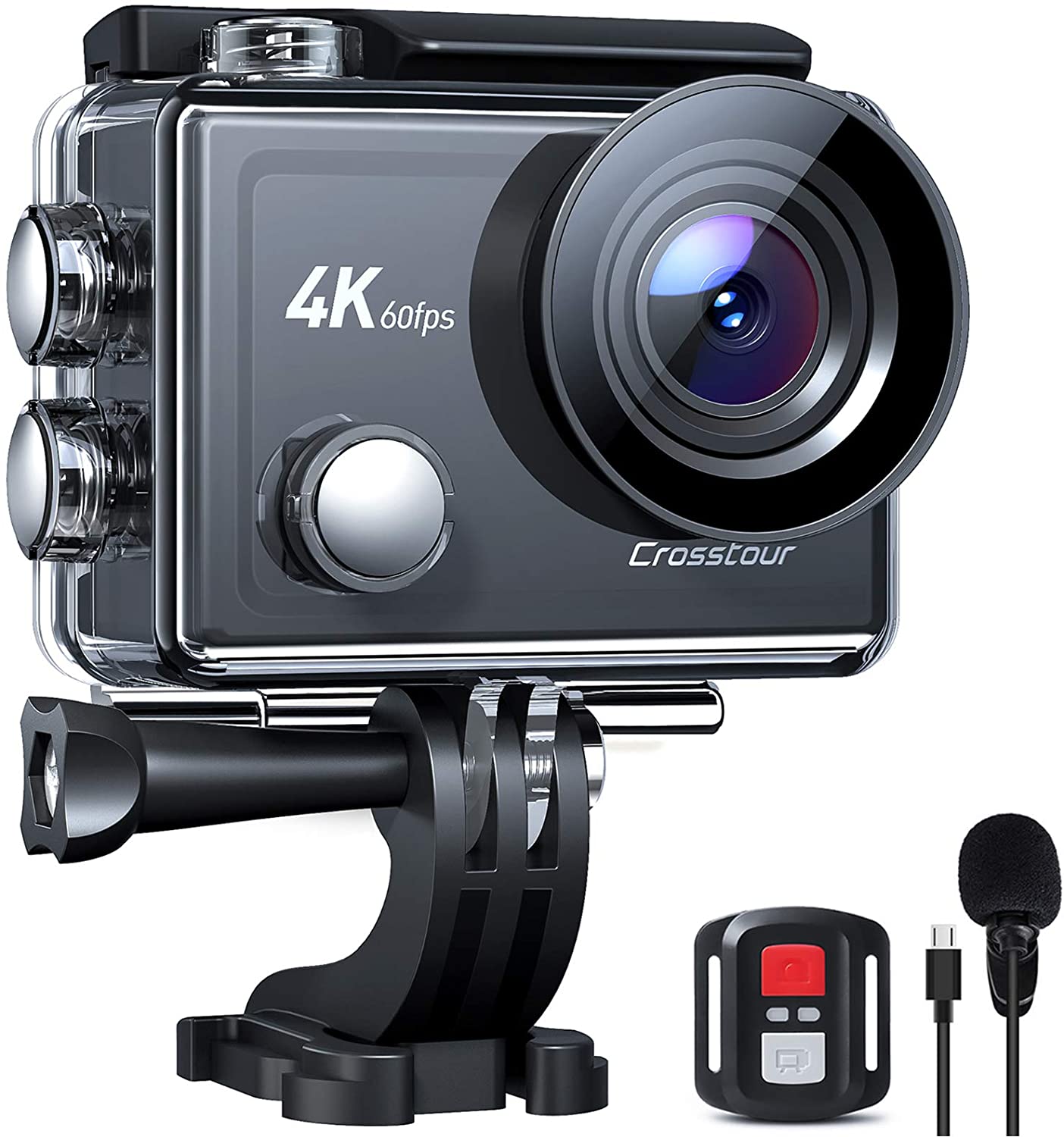
Late last year, I
purchased the
Crosstour CT9900 for
£54.99
along
with a Sandisk 128Gb Extreme Pro memory stick for £21.99
from Amazon.co.uk.
I required to make only a couple of videos so it seemed a
reasonable cost effective investment and I was not wrong.
The videos turned out okay, although I still have to make the main video
regarding my Triumph Speed Triple RS. My last motorbike video was back in 2014
when I strapped a fairly large Sony A57 camera to my chest which I did not
intend to repeat.
The camera arrived with a watch style remote control that you fit to your wrist
and a whole load of accessories for securing it for action videos. The photos
were good and although the camera is very small and fiddly, I managed to get
some nice images, including the neighbours dog.
Overall the Crosstour CT9900 is excellent value for the money. You can read my
review which includes videos and image
samples.
_________________________________________________
3rd May 2021
The Leica M10-P 35mm 'Full Frame'
Digital Camera
It appears that Leica has
removed a number of digital 35mm 'Full Frame' cameras from their range and kept
their Leica M10-P as the 'go to' camera for street photography. The following
video covers the Leica M Cameras, old and new, but for me the interesting part
of the video is his analysis of photography -
I must admit that I would love a Leica M3 35mm Film Camera in mint condition, as
a present. A
modern digital
Leica M10-P Camera is as near to a Leica
M3 film camera as you can get. The camera body
costs £6,750.00 vat inclusive and a decent
Leica Summilux 50mm f1.4 ASPH-M Lens costs
£3,500.00 vat inclusive.
If there are any mega rich widows out there, I'm your man.
_________________________________________________
3rd May 2021
Fujifilm GFX 100S Medium Format vs Canon
R5 Camera?
The other day, I was
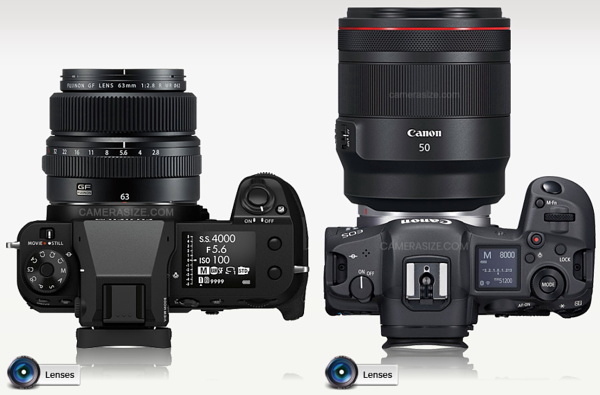
comparing a Fujifilm GFX 100S medium format camera to a Canon R5 35mm 'Full Frame'
camera. I decided to add a lens to each camera that offered up a 50mm field of
view. It proved an interesting comparison for size but also for cost. It was
£219.67 extra for the Fujifilm GFX 100S camera.
Chris Niccolls provided a very nice review of the Fujifilm GFX 100S camera which I must
admit led me to consider moving forward with a medium format large digital sensor camera
system, rather than the smaller digital sensor of the 35mm 'Full Frame' one. Well, we all must have our
dreams, its a bit like looking at a Ferrari and settling for the car you already
have.
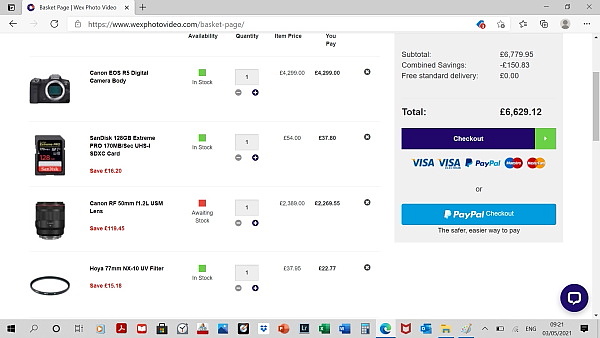
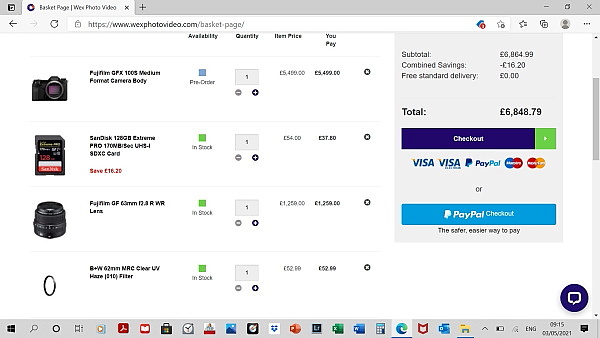
I have added a few screen shots from Camera
Size and
WEX Photo Video as a comparison of camera size and what I might
add to the base system if I was starting out on medium format. I usually
purchase my camera gear from WEX but I receive no remunerations from them for
this post -
_________________________________________________
3rd May 2021
Back to the Darkroom?
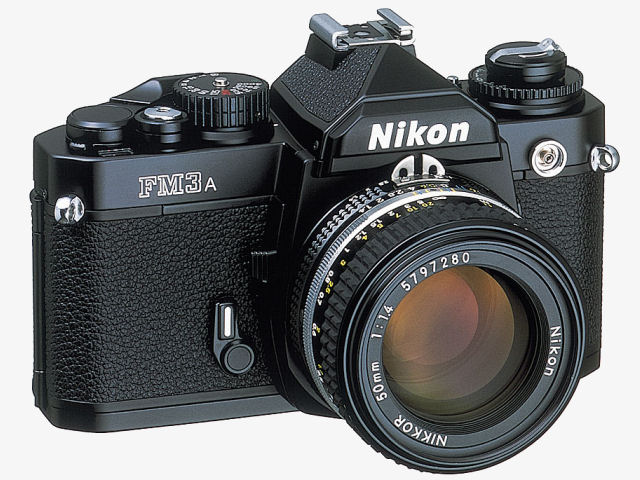
I still use my
Nikon FM3a 35mm Film SLR Camera with Nikon
28/50/135mm AIs prime lenses - a great diversion from digital. I am off this
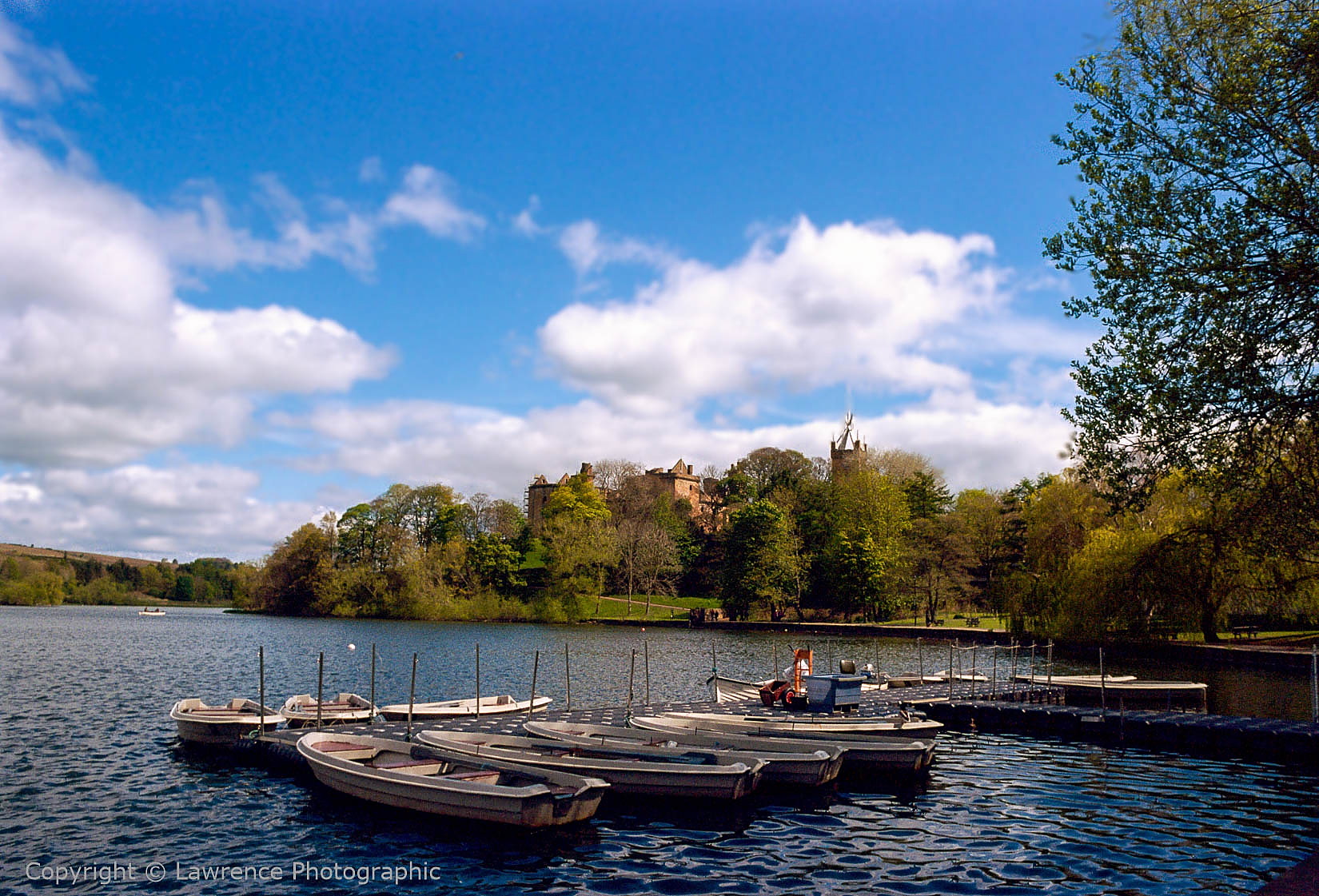
week with a fellow photographer to Linlithgow in Scotland and I am taking along
my Nikon and some rolls of
Kodak Ektar Colour Film from the fridge to
shoot some scenes of the fishermen at the loch.
I
usually get
my film developed by a professional lab and tend to use
Kodak Express. This coming winter, I might
return to home developing my film, and to make is easier, I would shoot
Monochrome which is simple to develop and scan to
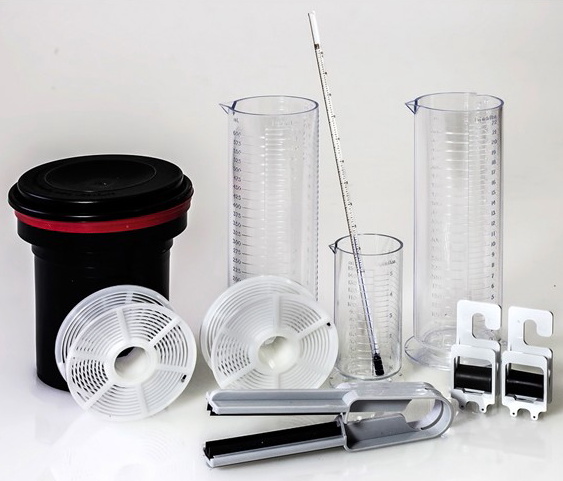
digital. I would have to re-invest in some new darkroom kit as I last used my
(long lost) kit back in the 1970s.
Colour film
development at a local lab is a bit expensive, if I also want the negatives scanned,
but luckily I managed to get my old Windows XP computer to work so I can use my
old Canon Canonscan 4000 FS scanner.
A scanned example -
There is no doubt that a Nikon SLR film camera with a manual focus lens offers a
different handling perspective to a digital camera as all the modern technology
is stripped away and it is back to basics - nice. You can still purchase second
hand 35mm Film SLR cameras and one of the best retailers for Nikon is
Grays of Westminster, where I purchased
mine back in 2009. Please note that I do not receive any remunerations from any
of the retailers mentioned in this post.
_________________________________________________
1st April 2021
The Canon 'April Fool' ??
Its the 1st of April and
traditionally 'April Fools Day' but I think Canon's planned end of their Canon
EF Lenses is true and no joke? If true, one can expect the Canon 5D MK IV DSLR
to drop like a stone in purchase price or like the demise of the old Land Rover
Defender suddenly rocket in price as the demand for the last of the 5D
production to be snapped up by users of Canon EF Lenses? A current second hand
Defender is now almost twice the retail price at the end of its production; one
wonders what the second hand price of the last Canon 5D DSLR MK IV Camera will
be?
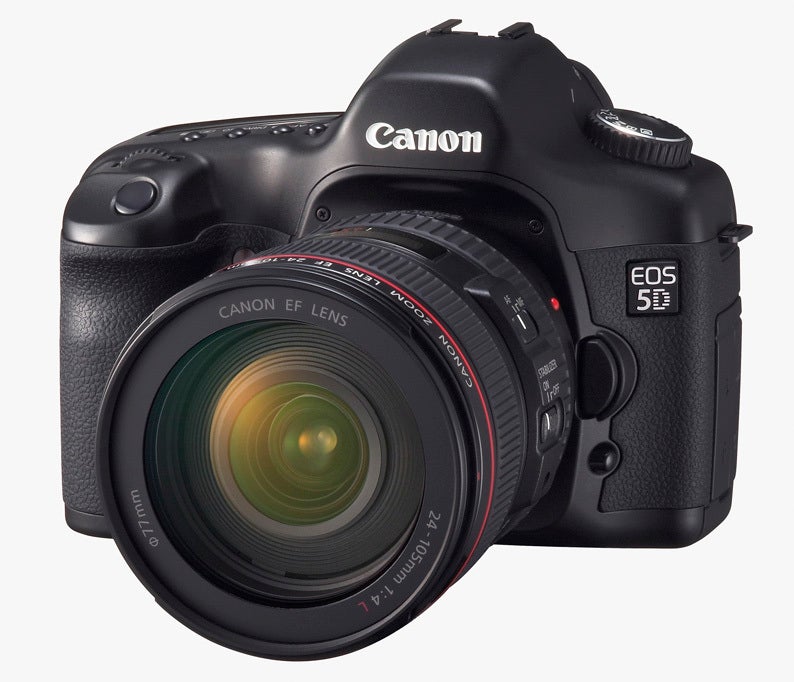
The other day, I picked up my 2005 Canon 5D 'Classic' DSLR camera and took it
out for a spin with my Canon 24-105 L IS MK 1 Zoom Lens. It was nice to return
to frame frame, having spent a great deal of my time with my Fujifilm X100s
Compact Camera that I use for 'Street
Photography'.
I remain seriously
impressed by the simplicity of the Canon 5D DSLR, its handling is very similar
to a standard 35mm 'Film' SLR camera but with a 12 Mega Pixel digital sensor
instead of film and the rear LCD screen is tiny and provides a preview of the
captured image as well as the basic settings and that's it - no video
capability, no live view and set in aperture priority mode with the Canon 24-105
L IS MK 1 Zoom Lens, the camera is a pleasure to use. You can pick up a second
hand Canon 5D MK 1 in good condition with a low shutter count for around
£300-£600 in the UK.
I remain somewhat concerned regarding my Canon 5D and Canon EF Lens investment.
What to do for the future, because I don't want to replace my EF Lenses or
invest in the new Canon R6 and Canon RF Lenses. I am only too aware that Canon
DSLR cameras have a shelf life as the internals and re-chargeable batteries will
slowly break down over time, although 'touch wood' my 15 year old Canon 5D and
Canon L Lenses are still operational. I will be keeping my eye on the market but
the latest (2016) Canon 5D MK IV DSLR has already climbed back up to a purchase
price of around £2,800 in the UK and one wonders if there will be a Canon 5D MK
V DSLR?
The other day, and at his
request, I joined a mate of mine to assist him in
developing his
skills on some camera equipment he had inherited from his late brother-in-law.
We went for a walk and he produced a Canon 80D DSLR camera and some Canon lenses
from his shoulder bag. I set it up in aperture priority mode, tweaked the image
settings and controls for him to use. He soon got
the hang of it, and some of his first images were excellent. I have to admit,
the Canon 80D DSLR camera was seriously impressive, not just in the handling,
but the image quality in the camera jpegs was superb. I was even more impressed,
because he was using basic Canon lenses rather than the expensive Canon L
lenses.
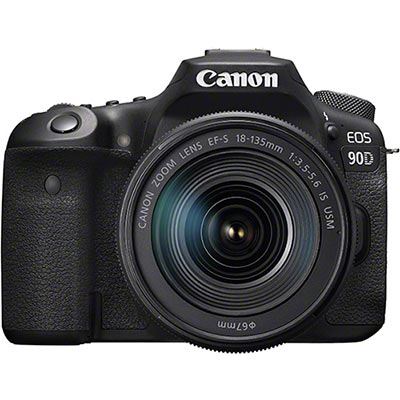
If the 2016 Canon 80D DSLR camera is superb, the late 2019 Canon 90D DSLR, the
replacement model, must surely be a decent step up. Both cameras have a 'live
view' rear LCD screen, so although the viewfinder is optical, and that is a good
thing, a photographer gets the best of both worlds. The Canon 90D DSLR
camera body boasts a 32.5MPixel APS-C digital sensor, 45 cross-type autofocus
points, 4K video, blue tooth, wi-fi, shoots at 10 frames per second and comes in
at around £1,249.00. With a Canon EF-S 18-135mm f3.5/f5.6 IS USM zoom lens
fitted (28.8mm - 216mm field of view) it costs around £1,629.00. Not bad when
you consider it can be used right across the main spectrum of photography and
its probably all you require - the lens even has image stabilisation for slower
shutter speeds when the camera is 'hand held'. The cream on the cake - the Canon
90D DSLR boasts a 30sec to 1/8000sec shutter.
I have a sneaky
feeling that Canon will release a R 'mirrorless' variant of this camera to
marry to their new RF lenses but perhaps at a premium price - time will tell. Of
course it will be supplied with an adaptor to
marry existing Canon EF and EF-S lenses. However, the Canon 90D DSLR makes for a
great camera for those photographers who already own Canon EF and/or Canon EF-S
lenses and don't want to invest in a Canon R camera body and use an adaptor.
 Canon
DSLR which may or may not be announced in the near future. If there is an
announcement in 2022 by Canon that there will be no further DSLR camera
development, then there is always the existing Canon 6D MK II or the Canon 5D MK
IV DSLRs to consider.
Canon
DSLR which may or may not be announced in the near future. If there is an
announcement in 2022 by Canon that there will be no further DSLR camera
development, then there is always the existing Canon 6D MK II or the Canon 5D MK
IV DSLRs to consider.