I just love the tonality of monochrome, especially those old black and white
films and it is incredible that way back in the 1920s/30s the cameras
could produce images and movies with such resolution and quality which
hold up, even today!
Monochrome
is coming back into vogue again, along with the clothes styles and the
dancing of the earlier part of the 20th Century, especially the silent
era of movies and the
Roaring 20s. It's gathering
strength and more and more photographers and videographers are
expressing their art in black and white!
Fred Astaire was good but Eleanor Powell was magnificent -
Thanks to films like
The Artist we are experiencing a
renaissance in black and white film and digital format. The lighting and
the glow of the images all play a part and the desire to use modern
lenses that emulate those 'classical' days is strong with Voigtlander,
Leica and Zeiss featuring very well for today's photography and of
course video. It is not by accident that Leica have introduced video
into their new M digital rangefinder with its electronic viewfinder.
"To be a photographer or a digital artist" that is the question. Whether
it is nobler in the mind to 'authentically' photograph the scene and
risk suffering the slings and arrows of outrageous criticism and
misfortune or to take up extensive post processing to avoid a sea of troubles and
so alter the image to one's perception".
However, there's the rub, many photographers do have their own
perception of the scene and often their final image on the web or print
on the wall invariably deviates from the reality.
When you read the internet reviews or articles on black and white conversions,
many photographers will state that the viewers are only interested in
the final result they see. There is some truth in this and
with digital photography when you shoot colour and then convert to black
and white, it is obvious that some post processing will have to be
administered to make the conversion. However, it could be argued that
the extensive manipulation of light by 'dodging and burning' and
'layering' in post processing could be regarded as fraudulent to your
talent as a photographer but a credit to your talents as a digital
artist. Mind you 'digital artist' on your business card might not sway
it with a guy looking to employ you as a photographer!
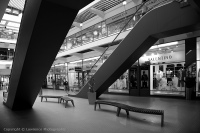
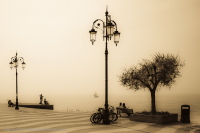
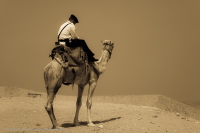
Here are a few of my black and white attempts which have been converted from
'RAW' colour files - there is no extensive post processing, other than
adjustments to sharpness, brightness and contrast. The image shot at
Lake Garda has been softened and the highlights slightly lifted.
A video of
some of the black and white work of Rui Palha.
Those who spend a great deal of their time in post processing very often
miss the fact that a true black and white 'masterpiece' is usually
judged by the content, composition and appears natural. In fact some of
the best black and white images are straight out of the camera as jpegs
or digitally scanned negatives produced by 'film' cameras. After all -
photography it is all about light in the first place and if the light is
correct and the image is captured properly then there should be hardly
any requirement for extensive post processing.
The location, subject material and the correct light conditions
are important but so is the camera, lens and even the filters. A
photographer is working with all of those elements together and
seeking the optimum image quality in the composition. The ability of the
equipment to resolve the finer detail at distance and especially with
landscapes is crucial for black and white images.
The 'draw' of the lens is another factor to be considered and how it
works with the filters to marry that fine detail to create the proper
effect.
Some lenses were made for black and white photography, not
literally but turn out as such. These kind of lenses deliver a
'classical look' to your images and are often used to
produce 'Fine Art' black and white pictures which display incredible
luminosity.
They have a natural ability to soften and retain a 'high
yield' of sharpness that is very visible and yet it is not seen as harsh
within the softness of the overall picture - the effect can be quite
stunning.
This video is taken from the silent movies of the 1920s and it is about
the wonderful
Clara Bow, it captures the essence
of the 'classical lens look' and Clara, who was the original
IT Girl long before the rise of
feminism, dressed beautifully and literally 'popped' from the scene.
I have embedded the video code but it may have to be viewed on Youtube
- click to start -
In this
video clip of the movie
It(1927), Clara starred as a
shop girl who was asked out by her boss. A great deal of academic tripe
has been written about this film but for me I like the way
they dress, the way they have fun and especially Clara who epitomised
the true innocence of feminism (love the final end scene) -
These days it is becoming more difficult to source a second hand
'classical' lens that delivers that beautiful look to portraits and
subjects that require to be drawn out from the overall scene, especially
in a monochrome setting! As soon as a lens appears with a known
reputation for the 'classical look' it is snapped up and usually the
cost is greater than the modern version of the same lens.
The 'classical look' can be engineered in software post processing and
the most popular software packages for creating black
and white conversions with extensive editing tools are
Adobe CS6and
Nik Silver Efex Pro.
The majority of photographers, especially those who regard their
photography as a hobby, revert to a software post processing solution to
draw the eyes
to the centre of an image with gentle vignetting, especially if the highlights are
also lifted and the borders
are gently softened with a nice out of focus bokeh effect! The
ideal software available for visual effect changes to a
monochrome image is
NIK Silver Efex Pro and it is available
for a free trial download from NIK.
I use
Adobe Lightroom to convert my colour 'RAW' images into black and
white, most often a sepia or an antique grayscale conversion. I don't
possess any soft lenses so I tend to soften some of my images using the
software. It does a reasonable job
but
I refuse to be 'completely' seduced by post processing and to date I
constantly strive to keep PP at a minimum. It is a very hard route to
take - to properly develop your photographic skills with a camera and
lens, a few filters and a tripod but I submit it brings greater
satisfaction that 'dodging, burning and layering/merging an image in a
computer darkroom for hours on end - unless of course you want to get
into digital art.
For those of you photographers who seriously want to get into 'Digital
Art' and extensive post processing or HDR, then
Twisted Tree is
certainly a site that you can learn from. It is simply breathtaking and
the monochrome images will blow your mind! The site takes you through
standard colour photography to monochrome HDR and into the realms of
impressionist art..............worth checking out for any photographer who
aspires to make a start in photographic art!
The hard part regarding black and white photography could be considered
the finding of locations and subjects but a large part is also the
dedication required in preparation - judging the right light conditions,
the setting up of the gear and taking the shot. Sure a lucky subject
might just pop up and in that 'decisive moment' the shot is taken but in
the main, it is dedication and hard work that delivers the images!
My apologies to William Shakespeare!
If you have enjoyed this article - please donate to my
Charity of Choice - The Sick Kids